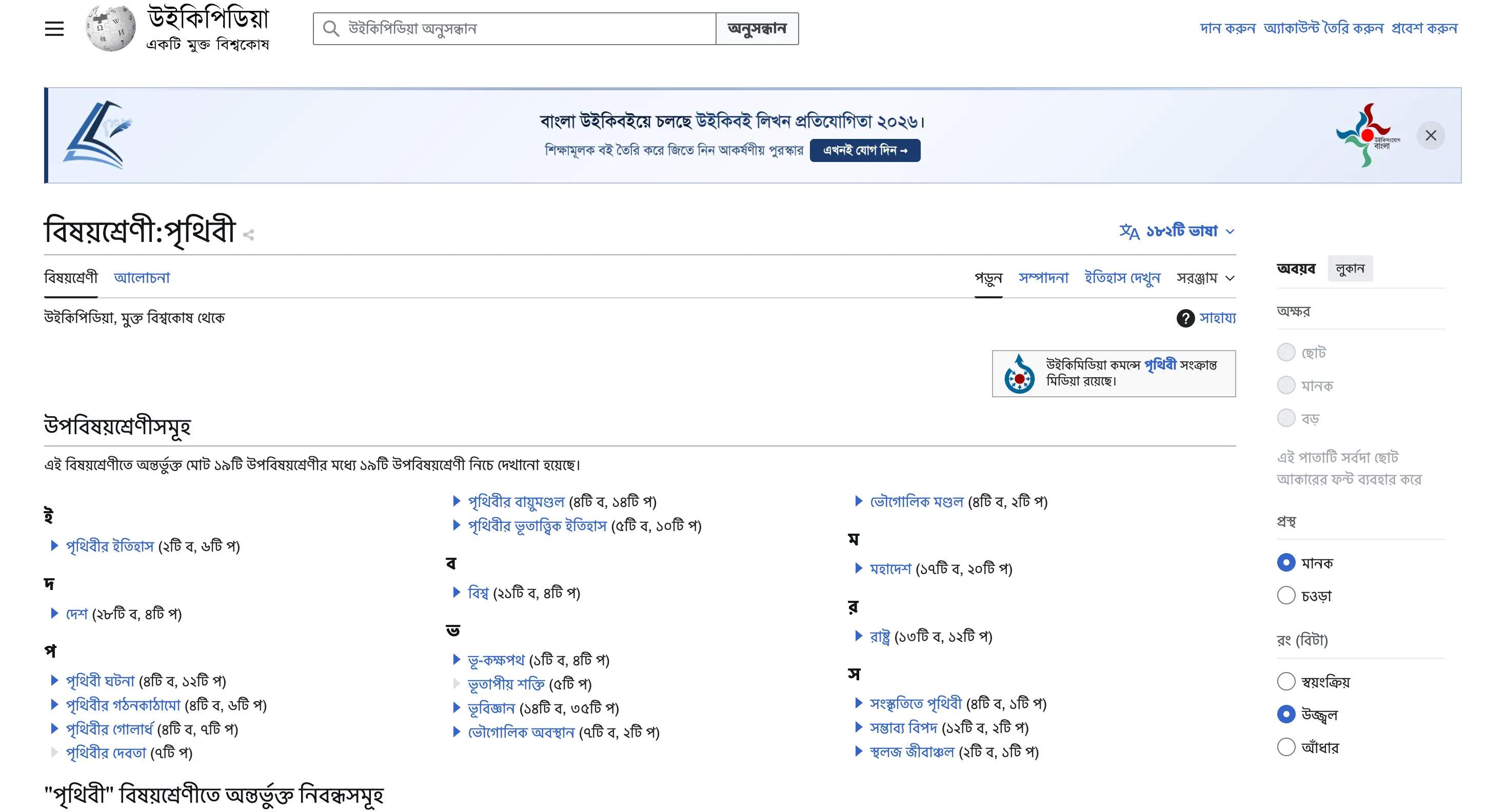
The question I get asked the wrong way

There's a question I get from Bangladeshi brand owners almost weekly, and they almost always ask it the wrong way.

"Tajul bhai, English Wikipedia or Bangla Wikipedia — which one is better?"

I understand the instinct behind the question. People want a simple answer: better or worse, stronger or weaker, prestigious or local. But the question itself contains a flawed assumption — that one Wikipedia is universally better than the other.

The honest answer is that they're different platforms serving different purposes, with different editorial cultures, different notability standards, different audiences, and different strategic implications for Bangladeshi brands. Choosing between them isn't about which is "better" in some abstract sense. It's about which matches the brand's actual goals, audience, and current notability foundation.

For some brands, English Wikipedia is the obvious right answer. For others, Bangla Wikipedia is. For many, both are appropriate — sequenced over time. And for some, neither is appropriate yet, regardless of how badly the founder wants encyclopedic presence.

This post walks through the strategic considerations that should drive the choice. I've worked with Bangladeshi brands across both platforms over the years, and the patterns are clearer than most founders realize once you set aside the prestige assumption and look at the actual mechanics.

What this guide covers

By the end, you'll understand:

  • The fundamental differences between Bangla and English Wikipedia

  • Audience reach and visibility tradeoffs

  • Editorial culture differences between the two communities

  • Notability standards — how they compare and where they diverge

  • The role of source language in each platform's editorial reviews

  • How AI search and Knowledge Panels treat each Wikipedia differently

  • Strategic frameworks for choosing one, the other, or both

  • Common mistakes Bangladeshi brands make in this choice

  • Realistic timelines and outcomes for each path

  • How to think about sequencing if you intend to pursue both

This is evergreen strategy work. The two Wikipedia platforms will evolve in their specifics — community sizes, policies, technical capabilities — but the fundamental considerations driving the choice will remain stable for years.

Part 1: What Bangla Wikipedia and English Wikipedia actually are

It's worth establishing baseline understanding of what each platform actually is, because most Bangladeshi marketers think of them as essentially the same thing in different languages. They aren't.

English Wikipedia (en.wikipedia.org) is the largest Wikipedia in the world by article count, editor base, and global reach. It has well over six million articles, hundreds of thousands of active editors, and a deeply institutionalized editorial culture developed over more than two decades. Its policies are among the most refined on the platform, its administrative processes are highly formalized, and its review queues — particularly through Articles for Creation — are among the strictest.

Bangla Wikipedia (bn.wikipedia.org) is the Bangla-language edition of Wikipedia, serving Bangla-speaking readers globally — primarily in Bangladesh and West Bengal in India. It has a smaller article base (around 150,000+ articles), a smaller active editor community, and a more accessible editorial culture. Its policies follow Wikipedia's global framework but are adapted for the Bangla-language context.

These are not translations of each other. They're separate encyclopedias with their own editorial communities, their own content priorities, and their own article-creation processes. A Wikipedia article in English doesn't automatically exist in Bangla, and vice versa. Each version requires its own notability case, its own sourcing, and its own community engagement.

This separation matters strategically. Some entities are notable on one platform but not the other. Some have articles on both that emphasize different aspects. And the audiences reading each platform are demographically and behaviorally distinct.

For Bangladeshi brands, understanding this separation is the first step toward making a genuinely strategic choice between them.

Part 2: Audience reach and visibility differences

The most quantifiable difference between the two platforms is audience reach, and the gap is significant.

English Wikipedia readership. English Wikipedia receives several billion page views per month globally. Articles on it surface in English-language Google searches worldwide, English-language Knowledge Panels, and English-language AI search responses across ChatGPT, Gemini, Claude, and Perplexity. For brands with any international ambition — exports, foreign investors, international media coverage, global talent attraction — English Wikipedia is the platform that delivers visibility.

Bangla Wikipedia readership. Bangla Wikipedia receives substantially less traffic in absolute terms, but its audience is heavily concentrated in the Bangla-speaking population — primarily Bangladesh and West Bengal. Articles surface in Bangla-language Google searches, Bangla Knowledge Panel results, and Bangla-language AI responses where those capabilities exist. For brands focused entirely on the Bangladeshi domestic market with no international visibility goals, Bangla Wikipedia delivers more concentrated relevance even though absolute traffic is lower.

The strategic question isn't "which has more readers" — English does, by orders of magnitude. The question is "which audience matters to your brand."

Consider three illustrative cases from clients I've worked with:

A Bangladeshi technology company seeking foreign investment, international hiring, and global press coverage — English Wikipedia is clearly the priority. The audience reach gap matters enormously for their goals.

A Bangladeshi cultural institution focused on Bangla literature preservation and primarily relevant to domestic and diaspora Bangla-speaking audiences — Bangla Wikipedia is more strategically aligned, even with lower absolute traffic.

A Bangladeshi consumer brand with significant domestic market presence and aspirations toward regional expansion across South Asia — both platforms matter, with sequencing typically starting at Bangla and progressing toward English as international media coverage develops.

The right choice depends on which audience you actually need to reach, not on which platform has the bigger general numbers.

Part 3: Editorial culture differences

Beyond audience reach, the two platforms have meaningfully different editorial cultures — and this affects how brand-related articles are received, reviewed, and maintained.

English Wikipedia's editorial culture. Highly institutionalized. Strong norms around neutrality and verifiability. Active patroller community that scrutinizes new articles intensively, particularly for brand-related subjects. Deep skepticism toward conflict-of-interest editing, with sophisticated detection mechanisms for paid editing patterns. Established workflows like Articles for Creation that funnel new articles through experienced reviewers. Comparatively slow but rigorous review processes.

For Bangladeshi brands, this means English Wikipedia engagement requires unusually careful attention to disclosure, sourcing, and neutral tone. Articles that wouldn't survive five minutes on English Wikipedia might pass review on smaller platforms. The bar is high, but articles that clear it tend to be durable.

Bangla Wikipedia's editorial culture. Smaller, more accessible community. Fewer experienced reviewers, which means faster review turnarounds but also less consistent reviewer expectations. Policy framework follows Wikipedia's global standards but is adapted for the Bangla-language context. Generally more welcoming to new editors and new article submissions, with comparatively less aggressive patrolling of brand-related content.

This doesn't mean Bangla Wikipedia is "easier" — that framing is misleading and often leads brands astray. The notability requirements are real, the verifiability standards apply, and articles that don't meet them get deleted. But the practical experience of engaging with Bangla Wikipedia is often less adversarial than English Wikipedia, particularly for first-time editors.

For brands, the culture difference shapes strategic timing. Bangla Wikipedia engagement can sometimes deliver published presence faster than English Wikipedia. English Wikipedia engagement delivers more institutionally durable presence but on longer timelines.

Part 4: Notability standards compared

Both platforms follow Wikipedia's global notability framework, but practical application differs in important ways.

English Wikipedia notability application. Highly developed and rigorously enforced. The General Notability Guideline (significant coverage in reliable independent sources) is supplemented by subject-specific guidelines for companies (NCORP), academics (NACADEMIC), musicians (NMUSIC), and others. Reviewers apply these guidelines strictly, and brand-related articles face particular scrutiny because of widespread paid editing concerns.

For Bangladeshi brands, English Wikipedia notability typically requires:

  • Multiple substantial articles in English-language tier-one publications, or in Bangla publications with verifiable English-language equivalents

  • Independent, in-depth coverage where the brand or subject is the primary topic

  • Established editorial outlets, not lower-tier websites

  • Coverage spanning meaningful time (typically multiple years, not just recent press)

  • For founders and executives, independent achievement notability rather than borrowed corporate notability

This is the highest practical bar for Bangladeshi brand-related notability cases.

Bangla Wikipedia notability application. Same framework, somewhat less rigorous application in practice. Bangla-language sources carry full weight (which they technically do on English Wikipedia too, but with practical friction). Local Bangladeshi publications carry more naturally recognized weight. Reviewers tend to be more familiar with the Bangladeshi media landscape and can more readily assess source quality.

For Bangladeshi brands, Bangla Wikipedia notability typically requires:

  • Substantial coverage in major Bangla-language publications (Prothom Alo, Kaler Kantho, Bangladesh Pratidin, Samakal, and similar)

  • Coverage in English-language Bangladeshi publications also counts and adds strength

  • Independent third-party recognition — awards, government recognition, industry standing

  • Editorial coverage, not press release republication or sponsored content

The practical bar is meaningfully lower for Bangladeshi-focused brands. A brand that doesn't yet qualify for English Wikipedia may genuinely qualify for Bangla Wikipedia, particularly when most of its coverage exists in Bangla-language sources.

This is one of the most important strategic considerations Bangladeshi brands underestimate — the right platform may not be the more prestigious one, but the one where you actually qualify.

Part 5: The source language question

A topic that deserves its own focused treatment — because it's the source of more strategic confusion than any other dimension of this choice.

Wikipedia's official position. Both English Wikipedia and Bangla Wikipedia explicitly allow sources in any language. There is no policy requirement that English Wikipedia articles must cite only English sources, or that Bangla Wikipedia articles must cite only Bangla sources. A claim sourced to a Bangla newspaper is theoretically just as valid on English Wikipedia as on Bangla Wikipedia.

The practical reality. On English Wikipedia, non-English sources create friction during the review process. Reviewers who don't read Bangla can't easily verify the cited claims, which slows reviews and increases skepticism. Articles relying heavily on Bangla sources face more pushback, more revision rounds, and longer publication timelines. Articles relying on a mix of English and Bangla sources, with English sources establishing the core notability case and Bangla sources supplementing detail, tend to fare better.

On Bangla Wikipedia, reviewers are by definition Bangla-readers. Bangla sources are easily verifiable. English-language sources also count and are accepted. Source-language friction essentially disappears.

The implication is significant for brands whose coverage exists primarily in Bangla. For these brands:

  • English Wikipedia engagement is technically possible but practically harder, slower, and more failure-prone

  • Bangla Wikipedia engagement is more aligned with the existing source base

  • Building English-language coverage over time enables eventual English Wikipedia pursuit

  • Premature English Wikipedia attempts with predominantly Bangla sourcing often fail and damage future attempts

For brands whose coverage is balanced across languages, both platforms become realistic options simultaneously. For brands whose coverage is predominantly English, Bangla Wikipedia is still possible but typically less natural as a starting point — though it remains a valid second-platform addition.

Part 6: How AI search and Knowledge Panels treat each platform

I covered AI search and Knowledge Panels extensively in earlier posts in this series — the Knowledge Panel post and the AI search post — but the language-specific dimension deserves treatment here.

English Wikipedia's downstream influence. English Wikipedia disproportionately shapes AI training data, Knowledge Panel content in English-language searches, and English-language AI search responses. An article on English Wikipedia influences how ChatGPT, Gemini, Claude, and Perplexity describe an entity to English-speaking users worldwide — which is the majority of users globally.

Bangla Wikipedia's downstream influence. Bangla Wikipedia influences Bangla-language Knowledge Panel content, Bangla-language search results, and the increasingly developing Bangla-language AI capabilities of major systems. The downstream influence is real but smaller, both because Bangla AI capabilities are less mature and because Bangla-language search traffic is smaller in absolute terms.

The cross-language gap. This is worth highlighting clearly. An article that exists only on Bangla Wikipedia generally won't shape English-language AI responses about the brand. The English-language AI ecosystem can't easily access Bangla sources during training or retrieval, and the structured data linkages between the two Wikipedias don't fully bridge this gap.

For brands with international visibility goals, this means Bangla Wikipedia alone is insufficient for shaping English-language AI search representation. English Wikipedia presence is required for that specific outcome.

For brands focused on the Bangladeshi domestic market, the gap matters less. Bangla Wikipedia presence shapes the Bangla-language AI representation that matters for that audience.

This downstream influence question often becomes the deciding factor for brands torn between the two platforms. When AI search and Knowledge Panel visibility are explicit strategic goals, English Wikipedia's leverage typically wins — even when Bangla Wikipedia would be easier to achieve.

Part 7: Strategic frameworks for choosing

Based on hundreds of conversations with Bangladeshi founders and brand owners, here are the practical frameworks that drive sound decisions between the two platforms.

Framework 1: Audience-driven choice

Ask: who actually needs to find authoritative information about my brand?

  • International audiences (investors, foreign clients, global press, international hiring): English Wikipedia priority

  • Domestic Bangladeshi audiences (local press, domestic customers, local talent, government and regulators): Bangla Wikipedia is fully sufficient and often preferable

  • Mixed audiences with both domestic and international relevance: Both platforms over time, typically sequenced

Framework 2: Notability-driven choice

Ask: where do I actually qualify right now?

  • If you have multiple English-language tier-one publications covering you substantively: English Wikipedia is realistic

  • If your coverage is predominantly in Bangla but extensive and credible: Bangla Wikipedia is the natural starting point

  • If your coverage is thin in both languages: Neither is appropriate yet — build notability first using the framework in How to Build Notability Before Attempting Wikipedia

Framework 3: Goal-driven choice

Ask: what outcomes am I actually trying to produce?

  • Knowledge Panel display in international Google searches: English Wikipedia

  • AI search accuracy in English-language systems: English Wikipedia

  • Domestic credibility and recognition in Bangladesh: Bangla Wikipedia (or English Wikipedia if eligibility supports it)

  • Diaspora and West Bengal cultural visibility: Bangla Wikipedia

  • International press citation source: English Wikipedia

  • Academic citation source for Bangladesh-focused research: Either, depending on field

Framework 4: Capacity-driven choice

Ask: what can I realistically sustain over time?

Wikipedia presence isn't a one-time project. Articles require ongoing monitoring, occasional updates, and defense against vandalism or unfair editing. Maintaining presence on both platforms requires more capacity than maintaining one. For brands without dedicated capacity, starting with one and adding the second later is often more realistic than attempting both simultaneously.

These four frameworks usually converge on a clear choice once a brand thinks through them honestly. When they conflict — for example, when audience suggests English but notability supports only Bangla — the honest answer is usually to start with what's achievable now and build toward what's preferable over time.

Part 8: Common mistakes Bangladeshi brands make in this choice

I've seen the same mistakes repeated across many client conversations. The most damaging ones:

Defaulting to English Wikipedia without examining fit. Many founders assume English Wikipedia is automatically the better choice because of its size, prestige, and global reach. They invest in English Wikipedia attempts that don't match their notability foundation, fail expensively, and walk away discouraged. Often, Bangla Wikipedia would have been both more appropriate and more achievable.

Dismissing Bangla Wikipedia as "lesser." A related mistake. Some Bangladeshi brand owners treat Bangla Wikipedia as a consolation prize — something they'd settle for if they couldn't get English Wikipedia. This framing misses the genuine strategic value of Bangla Wikipedia for brands whose audience and reach goals are domestic.

Treating both as identical projects. Some brands engage agencies to "create our Wikipedia page in both languages" as if it's a single task. It isn't. The notability cases are separate, the editorial communities are separate, the review processes are separate, and the article content often appropriately differs. Treating them as one project produces lower-quality work on both.

Attempting English Wikipedia with predominantly Bangla sourcing. This combination has the highest failure rate I've observed. The source-language friction described in Part 5 derails these attempts repeatedly. Brands in this position should either build English-language coverage first or pursue Bangla Wikipedia where their sourcing actually fits.

Trying to translate one platform's article to the other. A Bangla Wikipedia article doesn't simply translate to an English Wikipedia article, or vice versa. Each platform's notability case must be established independently, with sourcing that fits that platform's review process. Translation-based approaches typically fail because they assume cross-platform equivalence that doesn't exist.

Pursuing both before either is sustainable. Brands without the capacity to maintain even one Wikipedia article over time often pursue both, then watch both deteriorate through neglect after the initial publication push fades. Better to sustain presence on one platform well than to fail at presence on both.

Ignoring downstream visibility implications. Choosing the platform without thinking through Knowledge Panel implications, AI search implications, and long-term entity authority foundation is shortsighted. The Wikipedia choice has downstream effects across many discovery surfaces, as I covered in the AI search post.

Avoiding these mistakes mostly comes down to honest self-assessment before any platform engagement begins. The frameworks in Part 7 are the assessment structure I recommend.

Part 9: Realistic timelines and outcomes for each path

Practical expectations for each platform, based on experience with multiple Bangladeshi clients across both:

English Wikipedia engagement timeline.

  • Notability assessment and source audit: 2-4 weeks

  • Source research and supplementary documentation: 4-8 weeks

  • Article drafting and internal review: 4-6 weeks

  • COI disclosure and AfC submission: 1-2 weeks

  • AfC review process (current backlog): 4-16 weeks

  • Initial revision rounds: 4-12 weeks if required

  • Publication and stabilization: Additional 2-4 weeks of monitoring

Total realistic timeline: 5-12 months from kickoff to live published article. Some attempts conclude in 4 months. Some take 18+ months. Some fail entirely and require longer-term notability development before retry.

Outcomes: Strong articles backed by genuine notability typically survive long-term with proper monitoring. Articles built on borderline notability cases face higher deletion risk and require more active defense.

Bangla Wikipedia engagement timeline.

  • Notability assessment and source audit: 2-3 weeks

  • Source research: 2-4 weeks

  • Article drafting and internal review: 2-4 weeks

  • Community submission and engagement: 1-3 weeks

  • Review and revision process: 2-8 weeks

  • Publication and stabilization: 2-4 weeks

Total realistic timeline: 3-6 months from kickoff to live published article. Generally faster than English Wikipedia because of shorter review queues and more accessible editorial process.

Outcomes: Articles with genuine notability foundations typically publish more readily. The smaller editor community means less aggressive scrutiny, which is mostly favorable but does mean less help defending articles against later challenges.

Sequenced both-platform engagement.

For brands pursuing both, the standard sequence I recommend is:

  • Year 1: Bangla Wikipedia (when notability supports it) — establishes initial encyclopedic presence

  • Years 1-2: Continued earned media development, particularly English-language coverage

  • Year 2-3: English Wikipedia engagement once notability case strengthens

  • Ongoing: Coordinated monitoring of both articles, with appropriate updates as the brand evolves

This sequence works because it builds presence faster (initial Bangla publication within months) while developing the foundation for higher-leverage English Wikipedia presence over a longer horizon.

Part 10: A practical decision framework for your specific brand

If you're reading this trying to make an actual decision for your own brand, here's the worksheet I use in client consultations:

Section A: Your audience reality

  • Who are the most important external audiences for your brand?

  • What languages do those audiences search in?

  • Are international audiences (investors, foreign press, global clients) strategically critical?

Section B: Your notability reality

  • How many substantial, independent, in-depth articles cover your brand in English-language publications?

  • How many in Bangla-language publications?

  • What's the time span of that coverage?

  • Have you received third-party recognition (awards, industry honors, government recognition) that's documented?

Section C: Your goals reality

  • Are Knowledge Panel display and AI search visibility explicit goals?

  • Are international visibility outcomes (foreign press citation, international hiring, foreign investment) strategically important?

  • Are you focused entirely on the Bangladeshi domestic market?

  • Do you have aspirations toward regional South Asian expansion?

Section D: Your capacity reality

  • Do you have ongoing capacity to monitor and defend Wikipedia presence after publication?

  • Can you sustain presence on one platform, both, or neither?

  • What's your honest budget for both initial engagement and long-term maintenance?

Once you've worked through these sections honestly, the right answer usually becomes clear. The decision isn't really about which Wikipedia is "better" — it's about which fits your specific brand reality.

For brands genuinely uncertain after working through this framework, the answer is often "neither right now — build more notability first." Premature engagement with the wrong platform produces worse outcomes than patient development of the foundation that makes the right choice obvious later.

Frequently Asked Questions

Q: If I have to choose just one, which should I pick? A: It depends on your audience and notability foundation. International-facing brands with English-language coverage should generally choose English Wikipedia despite the harder bar. Domestic-focused brands with predominantly Bangla coverage should generally choose Bangla Wikipedia despite the lower prestige. The right answer comes from matching the platform to your actual reality, not from defaulting to one based on general assumptions.

Q: Can my Bangla Wikipedia article be translated to English Wikipedia later? A: Not directly. English Wikipedia requires its own independent notability assessment, its own sourcing, and its own editorial review. Content from a Bangla Wikipedia article can inform the English Wikipedia draft, but the English version must establish notability on its own terms. Brands should think of these as separate projects rather than translations of each other.

Q: Does having a Bangla Wikipedia article help or hurt later English Wikipedia attempts? A: Generally neutral, occasionally helpful. The existence of a Bangla Wikipedia article doesn't establish notability on English Wikipedia (cross-Wiki notability isn't a thing — each platform decides independently). However, the source research and notability documentation work done for Bangla Wikipedia often transfers usefully to English Wikipedia preparation, accelerating the second project.

Q: What if my brand operates only in Bangladesh — is English Wikipedia even relevant? A: It depends on your broader digital authority goals. If you want international press visibility, Knowledge Panel display in English-language Google searches, accurate representation in English-language AI systems (which are most AI systems globally), or any international audience reach, English Wikipedia provides leverage that Bangla Wikipedia doesn't. If none of those goals matter for your business, English Wikipedia isn't strategically necessary.

Q: Are the editors on Bangla Wikipedia easier to work with than English Wikipedia editors? A: "Easier" is the wrong framing. Bangla Wikipedia editors apply the same notability and verifiability principles as English Wikipedia editors, with somewhat less institutional rigor due to smaller community size. The experience tends to be less adversarial — fewer aggressive deletion challenges, more constructive feedback — but the underlying standards still apply. Brands that approach Bangla Wikipedia thinking they can cut corners typically have their articles deleted just like on English Wikipedia.

Q: Should my Wikipedia article on each platform contain the same information? A: Substantially overlapping but appropriately tailored. Both should accurately reflect the same underlying facts about the brand. However, content emphasis might differ — a Bangla Wikipedia article might appropriately go deeper into Bangladeshi market context and cultural relevance, while an English Wikipedia article might emphasize aspects that establish notability for international readers. The two articles serve overlapping but distinct purposes.

Q: Can I create both articles simultaneously? A: Technically yes, but I don't recommend it. Each platform requires its own focused attention — notability assessment, source research, editorial submission, review engagement, post-publication monitoring. Splitting attention across both from the start typically produces lower-quality work on both. The sequenced approach (Bangla first when appropriate, English later) usually produces better outcomes.

Q: How do I handle ongoing updates if I have presence on both platforms? A: Coordinated monitoring with consistent factual updates. When something material changes about the brand — new leadership, major recognition, significant business developments — both articles should be updated to reflect the change. This is typically handled through ongoing monitoring services as part of the Wikipedia management arrangement. The work involved is roughly 1.5x maintaining one article alone, since the core factual research applies to both updates.

Q: What happens if my Bangla Wikipedia article succeeds but my English Wikipedia article gets deleted? A: This is a real and common pattern. The Bangla Wikipedia article remains live, providing genuine value for Bangla-language audiences. The English Wikipedia attempt's failure doesn't affect the Bangla article. The recourse for the English Wikipedia failure is the standard one — address the reviewer feedback, continue building English-language notability foundation, and resubmit when the case is stronger. Some brands take multiple attempts over years to achieve English Wikipedia presence while maintaining successful Bangla Wikipedia presence throughout.

Q: Are there other language Wikipedias I should consider? A: For most Bangladeshi brands, English and Bangla are the only strategically relevant platforms. Hindi Wikipedia may matter for brands with significant Indian market relevance. Other regional language editions rarely justify the engagement investment for Bangladesh-focused brands unless there's a specific strategic reason — for example, a brand with significant Middle East operations might consider Arabic Wikipedia eventually.

What next?

If you've read this entire series — the Wikipedia page creation guide, the Knowledge Panel post, the notability-building roadmap, the AI search post, and now this Bangla vs English analysis — you have a more complete picture of Bangladesh-context Wikipedia strategy than almost any brand owner approaching this work in our market.

The next step depends on where you stand:

If you've worked through the decision framework and feel confident about platform choice: Request a free notability assessment from our team. We'll evaluate your specific case for the platform you've chosen, identify any documentation gaps, and tell you honestly whether the timing is right. Visit our Wikipedia Page Creation Services page or contact us directly.

If you're still uncertain between platforms: A 60-minute consultation often resolves this faster than additional reading. We can walk through your specific audience, notability foundation, and goals together, and identify the right path. Often, the right answer involves sequencing both platforms rather than choosing between them.

If notability isn't yet sufficient for either platform: The notability-building roadmap is your starting point. Our content marketing practice handles the earned-media development this work requires, with explicit attention to building both English and Bangla coverage foundations strategically.

If your foundation work spans multiple disciplines: Our integrated SEO services, content marketing, and Wikipedia services together build the entity authority foundation that supports Wikipedia eligibility, Knowledge Panel display, AI search accuracy, and long-term digital authority across every emerging discovery surface.

Whatever your starting point, the principle remains consistent. Wikipedia presence — on either platform — is earned through genuine notability, built deliberately over time, and maintained through ongoing care. The brands that approach the Bangla vs English choice strategically build presence that compounds across years. The ones that default to assumptions or chase prestige without examining fit waste resources on platforms that don't match their actual reality.