
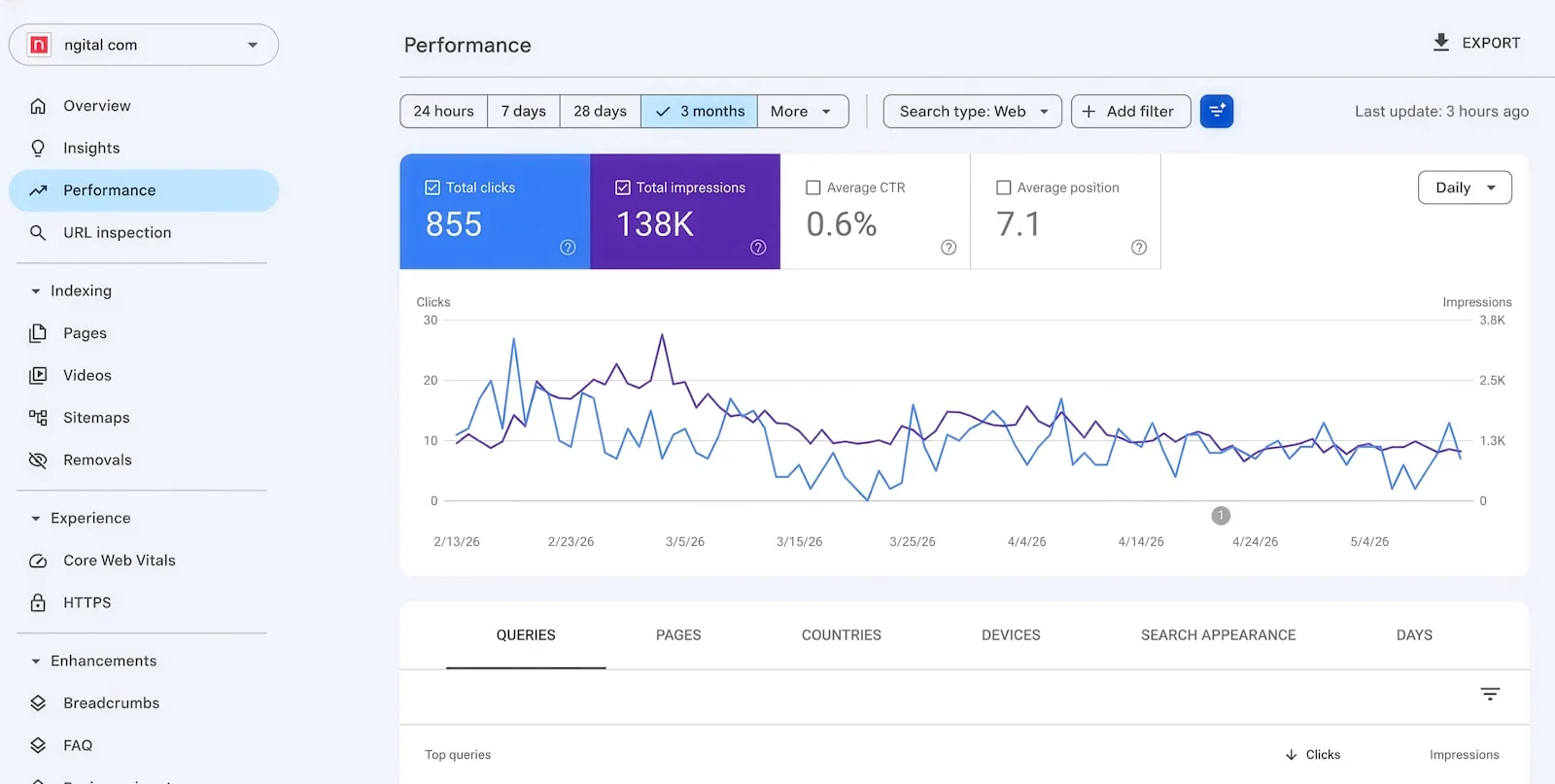
Search engine optimization has transformed into one of the most consequential digital marketing disciplines for Bangladeshi businesses. While paid advertising continues commanding most marketing attention, organic search drives substantial traffic across every industry — and represents the only acquisition channel where investment compounds into permanent business asset rather than ongoing expense. Real estate developers ranking for "apartment in Bashundhara" generate qualified inquiries indefinitely. E-commerce brands ranking for product searches capture buyers without ongoing ad spend. Healthcare providers ranking for condition-specific searches build sustainable patient pipelines. Education platforms ranking for course-specific queries generate enrollments through organic discovery. B2B service companies ranking for industry searches generate qualified business inquiries. Across every category, the brands winning today have built systematic SEO programs that turn search engines into reliable, scalable, profitable acquisition channels.
Yet most Bangladeshi businesses operate with chronically weak SEO despite the category's strategic importance. They focus marketing entirely on paid acquisition while their organic traffic stagnates at fractions of potential. They rank poorly for high-value commercial keywords competitors capture systematically. They operate websites with fundamental technical SEO problems that prevent rankings regardless of content quality. They publish content randomly without keyword research, search intent analysis, or strategic targeting. They ignore local SEO despite location-driven search dominating many BD industries. They underutilize Bangla SEO despite massive Bangla search volume going to international content unable to serve BD audiences properly. They miss schema markup, internal linking, and other technical optimizations that compound rankings over time. They lack the patience required for SEO's compounding returns, abandoning programs after 6 months when results typically emerge at 12-18 months. The gap between BD businesses operating sophisticated SEO and businesses operating fragmented approaches is widening rapidly — and the compounding nature of SEO investment means brands building authority today create competitive advantages competitors years behind cannot replicate quickly.
This comprehensive guide will give you everything you need to understand and operate world-class SEO for your Bangladeshi business — whether you're a founder evaluating SEO investment, a marketing director rebuilding organic strategy, an established business looking to scale beyond paid acquisition dependency, or an enterprise marketing leader building systematic organic capability. Drawing from years of building SEO programs across every industry — including real estate, e-commerce, fintech, education, healthcare, B2B services, and emerging categories — this guide covers everything from foundational concepts through advanced technical implementation, with specific focus on the realities of SEO in the Bangladesh market including the unique Bangla SEO opportunity most brands ignore entirely.
1. What Is SEO and Why It Matters for Bangladeshi Businesses
Search Engine Optimization (SEO) is the systematic practice of optimizing websites, content, and online presence to rank prominently in search engine results for relevant queries — driving organic traffic from users actively searching for information, products, or services your business provides. Unlike paid advertising (where visibility ends when budget stops), SEO produces compounding visibility — content ranking today can generate traffic for months, years, even decades after initial publication. This compounding nature transforms SEO from marketing expense into permanent business asset that appreciates over time.
The strategic distinction between SEO and paid acquisition becomes critical at scale. A business spending BDT 5 lakh monthly on paid acquisition generates traffic that stops the moment budget stops. The same BDT 5 lakh invested in sophisticated SEO over 12-24 months builds organic traffic infrastructure generating qualified visitors for years afterward at marginal ongoing cost. Smart businesses operate both paid and organic acquisition because they serve different functions — paid acquisition delivers immediate volume and predictable economics; organic acquisition delivers compounding long-term value and reduced acquisition cost dependency.
Why SEO Matters Specifically for Bangladeshi Businesses
Several factors make SEO particularly valuable for Bangladeshi businesses:
Massive search volume across every category: Bangladesh's growing internet population (over 75 million users) generates substantial search volume for products, services, information, and decisions across every business category. The aggregate organic opportunity dwarfs paid acquisition reach for most industries.
Rising paid acquisition costs: As more BD businesses invest in paid marketing, competitive intensity drives CPCs upward continuously. SEO investment reduces dependence on rising paid costs while building competitive moat as advertising becomes increasingly expensive.
Limited competitive SEO investment: Most BD businesses operate with weak SEO despite category importance. The relative scarcity of sophisticated BD SEO creates substantial competitive opportunity for businesses willing to invest systematically. Markets where most international markets have hundreds of competing SEO programs often have only handful of BD competitors operating serious SEO.
Bangla SEO untapped potential: Massive Bangla search volume goes to international content unable to properly serve BD audiences — creating opportunity for BD businesses serving Bangla-speaking audiences specifically.
Local SEO geographic specificity: BD's geographic distribution (Dhaka, Chittagong, Sylhet, Khulna, emerging cities) combined with location-driven service categories creates substantial local SEO opportunity through systematic geographic optimization.
Mobile-first search reality: 70%+ of BD search happens on mobile creating specific optimization opportunities most businesses don't address properly.
Long-term business value: Established SEO authority compounds over years creating defensible competitive position. BD businesses building SEO authority today develop advantages competitors will struggle to overcome regardless of how much they spend later.
The SEO Investment Reality
Effective SEO requires patient, sustained investment producing compounding returns over time. Common patterns:
Months 1-3: Foundation building. Technical SEO implementation, content strategy development, keyword research, initial content production. Limited measurable traffic increase but essential foundation work.
Months 4-6: Early visibility. Initial pages ranking for less competitive terms. Content production scaling. Authority building beginning. Modest traffic increases visible.
Months 7-12: Compounding begins. Substantial pages ranking. Content library growing. Authority accumulating. Significant traffic growth becoming visible. Initial business impact emerging.
Months 12-24: Acceleration. Strong rankings for valuable terms. Content library generating substantial traffic. Authority compounding. Business impact becoming substantial.
Year 2+: Mature SEO returns. Substantial organic traffic generating significant business value. Reduced dependency on paid acquisition. Defensive competitive position established. Continued investment producing accelerating returns.
This timeline conflicts with most BD businesses' expectation of immediate marketing results — leading many to abandon SEO programs at 4-6 months when results would have materialized at 12-18 months. The businesses that understand SEO's actual timeline and commit appropriate sustained investment achieve dramatically different outcomes than businesses applying paid-acquisition expectations to SEO investment.
2. How Search Engines Actually Work
Understanding how search engines actually work enables strategic SEO decisions rather than tactical optimization based on outdated assumptions. Modern search has evolved dramatically from simple keyword matching into sophisticated AI-driven systems evaluating dozens of factors when determining which pages rank for which queries.
The Search Engine Process
When users submit search queries, search engines (primarily Google in Bangladesh given its dominant market share) execute complex processes:
Crawling: Automated programs (bots/spiders/crawlers) systematically discover pages across the web by following links, processing sitemaps, and identifying new content. Google's crawler discovers Bangladesh websites continuously, prioritizing established sites and frequently updated content for more frequent crawling.
Indexing: Discovered pages get processed and stored in search engine indexes — massive databases categorizing pages by content, topics, authority signals, and relevance factors. Pages may be discovered without being indexed if they fail to meet quality thresholds or have technical issues preventing proper processing.
Ranking: When users submit queries, search engines evaluate indexed pages and determine which most likely satisfy user intent. Hundreds of ranking factors combine to produce final ranking decisions. Top results emerge from sophisticated algorithmic evaluation rather than simple keyword matching.
Presentation: Search engines display results in various formats — traditional blue links, featured snippets, knowledge panels, image carousels, video results, local pack results, AI Overviews (Google's AI-generated answer summaries), and increasingly sophisticated rich results. Different result types serve different query intents.
The Major Ranking Factors
Hundreds of factors influence Google rankings. The major categories:
Content quality and relevance: Does content actually answer the user's query? Modern search rewards comprehensive content that thoroughly addresses topics rather than thin pages targeting keywords. Quality signals include content depth, expertise demonstration, accuracy, and user engagement metrics indicating content satisfaction.
E-E-A-T (Experience, Expertise, Authoritativeness, Trustworthiness): Google evaluates content creators and websites for credibility signals. Experience signals showing first-hand knowledge. Expertise demonstrated through credentials and quality. Authoritativeness through industry recognition. Trustworthiness through accuracy and reliability. E-E-A-T particularly affects healthcare, finance, legal, and other "Your Money or Your Life" (YMYL) categories where misinformation creates serious harm.
User signals: How users interact with search results indicates result quality. Click-through rates from search results. Time spent on pages. Pages per session. Bounce rates back to search results. Return visits. These behavioral signals collectively indicate whether results satisfy users.
Backlinks (links from other websites): Other websites linking to your content signals authority and credibility. Not all backlinks equal — links from established authoritative sources carry dramatically more weight than links from low-quality sites. Backlink profile quality fundamentally affects ranking capability for competitive terms.
Technical SEO: Site speed, mobile-friendliness, crawlability, indexability, structured data, security (HTTPS), and other technical factors enabling or impeding search engines from properly accessing and understanding content.
On-page optimization: Page-level signals including title tags, meta descriptions, header structure, keyword usage, internal linking, image optimization, and content structure helping search engines understand page topics.
User experience signals: Core Web Vitals measuring loading performance, interactivity, and visual stability. Mobile usability scores. Intrusive interstitial penalties. Other UX factors directly affecting rankings.
Local relevance signals: For location-relevant queries, signals indicating geographic relevance — Google Business Profile, local citations, NAP (Name, Address, Phone) consistency, local content, location-specific links.
Freshness: For some queries, content freshness matters substantially. News and trending topics require recent content. Evergreen topics may favor established comprehensive content over recent additions.
Site authority: Overall domain authority accumulated through extensive high-quality content and backlinks. Newer sites face authority disadvantages competing against established competitors regardless of individual page quality.
Search Intent: The Critical Concept
Modern SEO success depends substantially on understanding search intent — what users actually want when submitting specific queries. Different query types serve different intents:
Informational queries: Users seeking information. "How does SEO work" indicates someone learning rather than buying. Content matching informational intent provides educational answers.
Navigational queries: Users seeking specific websites. "Facebook login" indicates someone trying to reach a specific destination rather than learning or buying.
Commercial investigation queries: Users researching before purchase. "Best CRM for small business" indicates buyer research mode. Content matching commercial intent compares options, reviews features, evaluates alternatives.
Transactional queries: Users ready to take action. "Buy iPhone 15 Bangladesh" indicates purchase intent. Pages matching transactional intent enable conversion — product pages, service signup pages, contact forms.
Local queries: Users seeking location-relevant information. "Coffee shop near me" or "dentist in Banani" indicates geographic intent. Local SEO factors heavily affect these rankings.
Pages mismatched to query intent fail regardless of other optimization quality. A purely informational article cannot rank well for transactional queries because users don't want education — they want to buy. A product page cannot rank well for informational queries because users want information — not sales pitches. Understanding and matching search intent forms foundational SEO discipline.
3. Keyword Research: The Foundation Everything Depends On
Keyword research forms the strategic foundation of SEO. Without proper keyword research, SEO becomes random publishing hoping something ranks. With sophisticated keyword research, SEO becomes strategic capture of specific commercial opportunities with measurable potential.
What Keyword Research Actually Means
Modern keyword research goes far beyond finding popular search terms. Effective keyword research identifies specific search opportunities matching business goals, evaluates competitive landscapes, understands search intent for each opportunity, prioritizes investments based on potential value, and maps content strategy to capture identified opportunities systematically.
The Keyword Research Process
Step 1: Business and Audience Foundation Effective keyword research starts with deep business and audience understanding. What products or services do you offer? What problems do you solve? Who specifically buys from you? What language do they use when discussing their needs? What objections do they raise? What information do they seek before purchase decisions? Understanding these dimensions enables keyword research that captures actual business opportunities rather than vanity traffic.
Step 2: Seed Keyword Generation Start with seed keywords — broad terms representing your business categories. A real estate developer might start with "apartment Dhaka," "flat for sale," "property investment." An e-commerce fashion brand might start with "women's clothing online," "saree shopping," "kurti Bangladesh." These seeds become foundation for systematic expansion.
Step 3: Keyword Expansion Multiple techniques expand seeds into comprehensive keyword opportunity maps:
Search tool exploration: Tools like Ahrefs, SEMrush, Moz, Ubersuggest provide keyword databases revealing related terms, search volumes, competition levels, and ranking opportunities.
Competitor keyword analysis: Identify keywords driving traffic to competitor sites — terms they rank for that represent opportunities for your business.
Google's own suggestions: Google Autocomplete, "People Also Ask" sections, related searches at result pages, and Google Trends all reveal user search patterns.
Customer language analysis: Sales conversations, customer service interactions, support tickets, and reviews reveal actual customer language different from internal industry jargon.
Long-tail expansion: Beyond high-volume head terms, long-tail keywords (specific multi-word queries) often produce highest commercial value despite lower individual volumes.
Step 4: Keyword Categorization Categorize discovered keywords by intent (informational, commercial, transactional), funnel stage (awareness, consideration, decision), business value (high-priority commercial vs nice-to-have informational), competitive difficulty, and content type required (blog post, service page, product page, landing page).
Step 5: Opportunity Prioritization Not all keywords deserve equal investment. Prioritization should evaluate search volume (estimated monthly searches), competitive difficulty (how hard to rank), commercial value (likelihood of converting searchers into customers), strategic fit (alignment with business priorities), and time to results (some keywords achievable in months, others requiring years of authority building).
The optimal keyword portfolio typically combines high-volume competitive terms (long-term strategic targets), mid-difficulty terms (achievable within 6-12 months of focused effort), low-competition long-tail terms (quick wins for traffic and authority building), and brand-related terms (capturing existing brand demand).
Bangladesh-Specific Keyword Considerations
BD keyword research involves unique considerations international keyword research doesn't address:
English vs Bangla searches: Many BD audiences search in both English and Bangla, often inconsistently. Real estate buyers might search "apartment Dhaka" in English then "ঢাকায় ফ্ল্যাট" in Bangla. Comprehensive BD keyword research captures both language variants for each opportunity.
Mixed-language searches (Banglish): BD users frequently mix English and Bangla in single queries. "Best smartphone bangladesh er jonno" or "real estate dhaka te best." Capturing these mixed-language search patterns requires understanding BD audience digital behavior beyond generic keyword research.
Geographic specificity: BD keyword research must address Dhaka, Chittagong, Sylhet, and other city-specific variants. "Apartment Gulshan" differs from "apartment Bashundhara" despite both being Dhaka. Geographic intent matters substantially.
Brand name searches: BD businesses often see substantial brand name searches once established. Tracking and capturing brand variants (different spellings, abbreviations, common misspellings) prevents competitor capture of brand traffic.
Cultural and seasonal patterns: BD-specific seasons (Eid, Pohela Boishakh, monsoon, winter) drive specific search patterns. Cultural events generate predictable search demand. Effective keyword research accounts for these patterns.
Local vs international competition: Some keywords face competition primarily from international sites (Wikipedia, international news) that BD businesses can outrank for local audiences. Other keywords face local BD competition requiring different strategy. Understanding which type of competition exists for specific keywords shapes appropriate strategy.
Tools for Keyword Research
Professional keyword research uses dedicated tools providing data impossible to gather manually:
Ahrefs: Comprehensive SEO platform with strong keyword research, competitor analysis, and link analysis capabilities. Particularly strong for understanding competitive landscapes.
SEMrush: Similar comprehensive capabilities to Ahrefs with somewhat different interface and feature emphasis. Many SEO professionals use both platforms.
Moz Pro: Established SEO platform with strong keyword research and ranking tracking. Often selected for specific feature preferences.
Ubersuggest: Cost-efficient alternative to enterprise platforms with adequate keyword research for smaller businesses.
Google Keyword Planner: Free tool through Google Ads providing keyword data, though primarily designed for paid advertising rather than SEO.
Google Search Console: Free tool providing actual search data for sites you own — including which queries already drive traffic and rankings.
Google Trends: Free tool showing search trend patterns over time, helpful for understanding seasonality and emerging topics.
Investment in professional keyword research tools typically pays back many times over through improved strategic decisions. Operating SEO without proper tools resembles flying without instruments — possible in good weather but problematic in difficult conditions.
4. On-Page SEO: Optimizing Individual Pages
On-page SEO encompasses optimizations made to individual pages helping search engines understand topics and rank pages appropriately. Strong on-page SEO multiplies the value of every other SEO investment by ensuring content actually appears for relevant queries.
Title Tags: The Single Most Important On-Page Element
Title tags appear as clickable page titles in search results and serve as primary on-page ranking signals. Every page needs a unique optimized title tag combining target keyword usage, click-attractive formatting, appropriate length (typically 50-60 characters), and accurate content representation.
Title tag best practices:
Include primary target keyword near the beginning when natural
Address user intent explicitly
Maintain unique titles per page (never duplicate)
Match content to title promise (preventing high bounce rates)
Include brand name when appropriate (typically at end of title)
Use compelling language attracting clicks beyond just keyword optimization
Example evolution from weak to strong:
Weak: "Services - Our Company" Better: "Digital Marketing Services in Bangladesh - Our Company" Strong: "Digital Marketing Services in Bangladesh | Quad-Certified Agency"
Meta Descriptions: Click-Through Rate Optimization
Meta descriptions appear below title tags in search results, serving primarily as click-through rate (CTR) optimization rather than direct ranking factors. While meta descriptions don't directly affect rankings, they substantially affect CTR which indirectly affects rankings through user signals.
Meta description best practices:
Keep length 140-160 characters fitting display
Address user intent and value proposition
Include target keyword (Google often bolds it in results)
Include compelling calls-to-action where appropriate
Avoid duplicate descriptions across pages
Match actual page content preventing high bounce rates
Header Structure: Content Organization
Header tags (H1, H2, H3, etc.) provide content structure helping both users navigate pages and search engines understand topic hierarchy.
Header structure best practices:
Use single H1 per page containing primary keyword and topic indication
Organize content under H2 subheadings covering major topic sections
Use H3 subheadings for detailed subtopics within H2 sections
Maintain logical hierarchy (H3 nested under H2, not jumping levels)
Include semantic keywords throughout header structure
Use headers as scannable navigation aiding user experience
URL Structure
URLs affect both user experience and search engine understanding. Clean, descriptive URLs outperform parameter-heavy URLs containing IDs and random characters.
URL best practices:
Use descriptive words rather than parameter strings
Include target keywords when natural
Keep URLs reasonably short
Use hyphens (not underscores) to separate words
Maintain consistent URL structure across the site
Avoid changing URLs after publication (or implement proper redirects when necessary)
Content Optimization
Beyond technical elements, content optimization includes substantial considerations:
Topic comprehensiveness: Modern Google prefers comprehensive content thoroughly covering topics over thin pages targeting keywords. Comprehensive content typically ranks substantially better than thin content even when thin content uses keywords more densely.
Keyword usage: Target keywords should appear naturally throughout content — in title, headers, opening paragraphs, image alt text, and naturally throughout body content. Keyword stuffing (excessive keyword repetition) damages rankings; natural keyword usage helps them.
Semantic keywords and related terms: Beyond primary keywords, semantic keywords (related terms, synonyms, contextually associated words) help search engines understand content topics comprehensively. Content about "real estate" should naturally include "property," "apartment," "developer," "buyer," and related terms.
Search intent matching: Content must match user intent for target queries. Informational keywords need informational content. Commercial keywords need commercial content. Transactional keywords need conversion-optimized content. Intent mismatching prevents rankings regardless of other optimization quality.
Content length: While length isn't a direct ranking factor, longer content tends to rank better for competitive terms because it can cover topics more comprehensively. The right length depends on topic complexity and competitive landscape — competitive terms requiring 2,000-5,000+ word comprehensive content while local low-competition terms may rank with 500-800 words.
Content freshness: For topics where currency matters, content freshness affects rankings. Regular content updates maintaining accuracy and relevance support sustained rankings.
Internal Linking
Internal links between pages help search engines understand site structure and pass authority between pages. Strong internal linking strategies amplify SEO investment across the site.
Internal linking best practices:
Link related content together creating topic clusters
Use descriptive anchor text (not "click here" or "read more")
Link from high-authority pages to pages needing authority boosts
Maintain reasonable link counts (not stuffing internal links into every paragraph)
Use absolute URLs for clarity
Audit broken internal links periodically
Image Optimization
Images affect SEO through multiple factors:
Alt text: Descriptive alt text describes images for screen readers and search engines. Alt text should describe image content accurately, include relevant keywords when natural, and provide context for users unable to see images.
File names: Descriptive file names (real-estate-apartment-bashundhara.jpg) outperform generic names (IMG_12345.jpg) for image SEO.
Image compression: Large image files slow page loading damaging rankings and user experience. Image compression maintains visual quality while reducing file sizes.
Image formats: Modern formats (WebP, AVIF) compress better than older formats (JPEG, PNG) while maintaining quality. Conversion saves substantial bandwidth.
Image schema: Structured data for images helps search engines understand image content enabling rich results.
Schema Markup
Schema markup provides structured data helping search engines understand page content categorically. Schema enables rich results — enhanced search displays with star ratings, prices, business information, recipe details, and other category-specific information.
Common schema types valuable for BD businesses include LocalBusiness schema (essential for businesses with physical locations), Service schema (for service-based businesses), Product schema (for e-commerce), Article schema (for blog content), Review schema (displaying ratings in search results), FAQ schema (for FAQ content potentially appearing as expanded results), HowTo schema (for instructional content), and Event schema (for events and announcements).
Schema implementation requires technical development but produces substantial visibility improvements through rich results that dramatically improve click-through rates.
5. Technical SEO: The Infrastructure Foundation
Technical SEO addresses the foundational website infrastructure enabling search engines to crawl, index, and rank pages effectively. Without proper technical foundations, even excellent content and authority cannot achieve rankings. Most BD websites suffer technical SEO problems that prevent rankings regardless of other optimization efforts.
Site Speed and Core Web Vitals
Site speed affects both user experience and rankings directly. Google's Core Web Vitals measure specific performance factors:
Largest Contentful Paint (LCP): Time until largest page content element loads. Target under 2.5 seconds.
Interaction to Next Paint (INP): Responsiveness when users interact with pages. Target under 200 milliseconds.
Cumulative Layout Shift (CLS): Visual stability during page loading. Target under 0.1.
Poor Core Web Vitals scores actively damage rankings. Strong scores provide ranking advantage. BD websites particularly suffer Core Web Vitals problems given mobile data connection variations and inadequate optimization for BD network conditions.
Site speed optimization combines multiple techniques: image compression and modern formats, code minification (CSS, JavaScript), browser caching, content delivery network (CDN) implementation, lazy loading for below-fold content, font optimization, third-party script optimization, server response time improvement, and database query optimization. Each technique compounds with others producing dramatic combined improvements.
Mobile Optimization
70%+ of BD traffic is mobile. Google's mobile-first indexing means Google primarily uses mobile site versions for ranking decisions. Sites operating desktop-first with mobile retrofits fundamentally underperform in mobile search rankings.
Mobile optimization requirements:
Responsive design adapting to all screen sizes
Touch-friendly button sizes (minimum 44x44 pixels)
Readable text without zooming required
Mobile-optimized navigation
Fast mobile load times (mobile data conditions differ from broadband)
No intrusive interstitials on mobile (penalty risk)
Mobile-friendly form designs
Click-to-call functionality for phone numbers
Test mobile experience using Google's Mobile-Friendly Test and PageSpeed Insights mobile reports. Identify and fix issues systematically.
Crawlability and Indexability
Search engines must successfully crawl and index pages to rank them. Crawl issues prevent rankings regardless of optimization quality.
Robots.txt: Tells search engines which pages to crawl or not crawl. Common mistakes include blocking important pages, blocking CSS/JavaScript needed for proper rendering, or having no robots.txt enabling unrestricted access including private areas.
XML sitemap: Provides search engines comprehensive list of pages to discover and crawl. Sitemap should include all important pages, exclude non-canonical or noindex pages, update when significant changes happen, submit to Google Search Console.
Noindex tags: Tell search engines to not index specific pages. Useful for thin pages, duplicate content variations, internal search results, and other pages not warranting index inclusion. Common mistake: accidentally noindexing important pages.
Canonical tags: Tell search engines which version of pages with similar content to consider canonical. Critical for e-commerce with multiple URL variations (sorting, filtering, tracking parameters), pagination, and other duplicate content situations.
Crawl budget optimization: Larger sites may face crawl budget limitations where Google doesn't crawl all pages frequently. Optimization includes prioritizing important pages, removing or noindexing thin content, fixing crawl errors, and improving site architecture.
Site Architecture and URL Structure
Site architecture affects how search engines understand site organization and how authority distributes throughout pages.
Hierarchical organization: Logical hierarchy from homepage through category pages through individual pages helps both users and search engines understand site organization.
Reasonable depth: Important pages reachable within 2-3 clicks from homepage receive more crawl frequency and authority than pages buried deeper.
Breadcrumb navigation: Breadcrumb navigation helps users orient within site structure and provides search engines structural information often appearing in search results.
URL structure: Clean, descriptive URL structures reflecting site hierarchy outperform parameter-heavy URLs containing IDs and tracking strings.
HTTPS and Security
HTTPS (secure connections) has been a Google ranking factor for years. Non-HTTPS sites face ranking disadvantages and trust issues. SSL certificate implementation, proper HTTPS redirects from HTTP versions, and ongoing security maintenance are foundational.
Structured Data Implementation
Beyond schema markup discussed in on-page SEO, comprehensive structured data implementation enables search engines to understand business information, content, products, services, and relationships at category levels. Schema implementation requires technical expertise but produces substantial visibility through rich results.
Technical SEO Audits
Periodic technical SEO audits identify and prioritize issues. Comprehensive audits use tools like Screaming Frog, Sitebulb, or Ahrefs Site Audit examining hundreds of factors. Most BD websites contain dozens of technical issues unaddressed even on sites with quality content. Systematic technical SEO improvement often produces dramatic ranking improvements without any content changes.
Learn more about our Web Development service for building technically sound websites supporting SEO from foundation.
6. Content Strategy for SEO
Content represents the primary mechanism through which SEO captures search opportunities. Without comprehensive content covering target topics, technical SEO and authority building cannot generate substantial traffic. Most BD businesses operate weak content programs limiting their SEO potential regardless of other investments.
Content Strategy Framework
Effective SEO content strategy combines multiple components:
Topic cluster organization: Modern SEO favors comprehensive topic coverage organized into clusters rather than random keyword-targeted pages. Topic clusters combine pillar content (comprehensive hub guides covering broad topics) with cluster content (specific subtopic pages) interlinked together. This guide you're reading represents pillar content covering SEO comprehensively; specific cluster posts could address individual aspects like keyword research, link building, or local SEO in greater depth.
Audience-aligned content production: Different audiences need different content. Awareness-stage prospects need educational content. Consideration-stage prospects need comparison and evaluation content. Decision-stage prospects need product information and social proof. Comprehensive content strategies serve all stages with appropriate content types.
Search intent matching: Content must match search intent for target queries. Informational queries need educational content. Commercial investigation needs comparison content. Transactional queries need conversion-focused content. Intent matching dramatically affects ranking success.
Comprehensive topical authority: Building authority on specific topics requires substantial content depth — multiple interlinked pieces covering different aspects of important topics. Sites covering topics comprehensively rank better than sites covering topics shallowly even when shallow sites have individual pages of similar quality.
Content quality standards: Content must genuinely serve users to rank sustainably. Thin content, duplicate content, AI-generated content without human refinement, and content lacking expertise or original insight increasingly fails to rank as Google improves quality detection.
Content Types and Their SEO Roles
Different content types serve different SEO functions:
Pillar guides: Comprehensive hub content covering broad topics extensively. This SEO guide represents pillar content. Pillar guides target high-volume competitive keywords requiring substantial depth, capture multiple search intents within single comprehensive pieces, anchor topic cluster strategies, and build topical authority for entire categories.
How-to and tutorial content: Step-by-step instructional content serves informational queries with strong search demand. "How to optimize page speed" or "How to set up Google Analytics" types of content capture educational search traffic while building practical authority.
Comparison content: "Best X for Y" or "X vs Y" content captures commercial investigation queries from buyers evaluating options. Comparison content often produces high conversion rates because readers are actively evaluating purchases.
Listicles and roundups: Numbered list content remains highly clickable and shareable. "Top 10 marketing tools for Bangladeshi businesses" type content captures interest-driven searches and builds engagement.
Case studies and customer stories: Case studies serve commercial intent by demonstrating actual outcomes. They build credibility while capturing search demand from buyers researching solutions.
Industry analyses: Detailed industry analyses build category authority while attracting links from industry participants citing your analysis. The combination supports both rankings and authority building.
Tools and calculators: Interactive tools (cost calculators, comparison tools, assessment tools) attract substantial search traffic from people seeking specific information. Tools also build links naturally as others reference them.
News and trend content: For categories where currency matters, news and trend content captures fresh search demand. News content typically has shorter lifespan than evergreen content but captures specific search moments.
Resource pages: Curated resource lists (recommended tools, helpful resources, useful links) attract both search traffic and natural links from creators who get included in resource lists.
Content Production Operational Reality
Effective SEO content programs require systematic production rather than sporadic publishing. Common patterns:
Editorial calendar planning: Content calendars planned months ahead enable strategic topic coverage rather than reactive publishing. Calendars should reflect keyword research priorities, seasonal opportunities, business priorities, and competitive considerations.
Production capacity: Effective SEO programs require sustained content production. Most BD businesses underestimate production volume needed — typically 4-12 substantial pieces monthly depending on industry competitive intensity and growth ambitions.
Quality consistency: Production volume must maintain quality. Low-quality content damages both rankings and brand reputation. Quality control processes ensure each piece meets standards before publication.
Expert involvement: Content benefits substantially from genuine expert involvement. Internal subject matter experts, founder participation, industry guest authors all bring expertise generic content production cannot replicate. Modern Google increasingly recognizes and rewards genuine expertise in content.
Distribution and promotion: Content production without promotion limits SEO impact. Newly published content needs initial promotion (social distribution, email distribution, link outreach) building initial engagement signals supporting later organic ranking growth.
Learn more about our Content Marketing service for systematic content production supporting SEO programs.
7. Link Building and Authority Development
Backlinks (links from other websites) remain among the most important ranking factors. Quality backlinks signal authority and credibility to search engines, dramatically affecting ability to rank for competitive terms. Without sustained link building, sites face inherent ceiling effects on competitive ranking potential regardless of content quality.
Why Links Matter
Search engines evaluate website authority partly through link signals — the assumption being that good content attracts links from other sites. Sites with extensive high-quality backlinks indicate trusted, valuable resources others find worth referencing. Sites without backlinks lack these third-party validation signals regardless of internal claims about quality.
Different links carry dramatically different weight. A link from an established authoritative site (major publication, industry leader, .edu or .gov site) carries dramatically more weight than a link from low-quality directory or spam site. Sometimes a single high-authority link produces more ranking impact than dozens of low-quality links combined.
Ethical Link Building Strategies
Effective link building requires creating genuine value justifying links from others. Various strategies all share this foundation:
Content-driven natural links: Outstanding content attracts links naturally as people discover and reference it. The compounding effect of quality content over time produces ongoing link acquisition without active outreach. Comprehensive guides, original research, industry analyses, and useful tools all attract natural links.
Guest content publishing: Contributing valuable content to industry publications, partner sites, and relevant blogs builds links while reaching new audiences. Effective guest content publishing focuses on genuine value rather than promotional content disguised as articles.
Digital PR: Strategic PR efforts targeting media coverage simultaneously build links from major publications. Newsworthy company announcements, industry data and research, thought leadership content, and expert commentary all attract media coverage with links.
Resource page outreach: Many sites maintain resource pages curating relevant tools, articles, or businesses. Strategic outreach to relevant resource page maintainers can earn inclusion when your content genuinely fits curated lists.
Broken link reclamation: Finding broken links on other sites linking to similar content (now defunct) and reaching out suggesting your working content as replacement produces links efficiently.
Original research and data publishing: Publishing original industry research, surveys, and data analysis attracts links from publications and bloggers needing data to support their content. The investment in original research often produces substantially more links than equivalent investment in other content types.
Strategic partnerships: Industry partnerships, joint research, collaborative content, and strategic relationships often produce reciprocal links benefiting all parties.
Local citations and directories: Industry directories, local business directories, and citation sources provide structured links and SEO signals beyond general link building. Particularly important for local SEO discussed in dedicated section below.
Speaking and industry presence: Conference participation, podcast appearances, panel discussions, and industry presence often produce links from event sites and coverage publications.
Link Building Operational Reality
Building substantial link profiles requires sustained outreach and content investment. Reality includes:
Time investment: Quality link building requires substantial time. Even effective programs typically produce 3-10 quality links monthly rather than hundreds of low-quality links possible through automated outreach. Quality matters dramatically more than quantity for sustained ranking improvements.
Outreach response rates: Even well-targeted outreach typically produces 5-15% response rates. Building 5 quality links may require 50-100 well-targeted outreach contacts. Volume and persistence matter alongside quality.
Long-term thinking: Link building works over long horizons. Single months show limited progress. Sustained efforts over 12-24 months produce compounding results dramatically different than short-term efforts.
Content as foundation: Outstanding content makes outreach successful. Poor content cannot be promoted into prominence regardless of outreach quality. Content quality fundamentally determines link acquisition potential.
Link Building Mistakes to Avoid
Common link building approaches that damage rather than help SEO:
Paid link schemes: Buying links violates Google's guidelines and triggers penalties when detected. Modern Google detection identifies most paid link schemes through pattern analysis.
Link exchange schemes: Reciprocal link exchanges (I link to you, you link to me) violate guidelines when done at scale or through scheme arrangements.
Low-quality directory submissions: Mass submission to low-quality directories produces no value and may trigger penalties.
Comment spam: Posting links in blog comments and forums almost universally provides no SEO value while damaging brand reputation.
Private Blog Networks (PBNs): Networks of sites created solely for backlink generation violate Google guidelines and frequently get penalized when discovered.
Excessive exact-match anchor text: Anchor text manipulation through repetitive exact-match anchors signals manipulation and triggers penalties. Natural link building produces diverse anchor text patterns.
The compounding effect of ethical link building over years produces sustained competitive advantage. Shortcut approaches typically produce temporary results followed by penalties destroying invested SEO progress.
8. Local SEO for Bangladeshi Businesses
Local SEO addresses geographic search opportunities particularly valuable for BD businesses given location-driven service categories and geographic specificity in consumer behavior. We covered local SEO substantially in the Healthcare Marketing Guide; this section addresses local SEO across all industries.
Why Local SEO Matters for BD Businesses
Bangladesh's geographic distribution combined with location-driven service categories creates substantial local SEO opportunity. Many high-value commercial searches include geographic specificity — "restaurant in Banani," "gym in Gulshan," "office space in Motijheel," "delivery service in Bashundhara R/A." Businesses ranking for these location-specific searches capture high-intent customers ready to take action immediately.
Beyond explicit location queries, Google increasingly localizes results based on user location even for searches without explicit geographic terms. "Coffee shop" returns local results to users in specific neighborhoods even without specifying location. "Marketing agency" returns local agencies to users in specific cities. The localization makes local SEO infrastructure increasingly important across categories.
Google Business Profile: The Foundation
Google Business Profile (GBP, formerly Google My Business) serves as foundation of local SEO. Comprehensive profile optimization affects rankings in Local Pack results (the map-based results appearing at top of many local searches) and in standard organic results for local queries.
GBP optimization components:
Accurate business name (exactly matching brand without keyword stuffing)
Primary business category (specific rather than generic)
Additional categories where relevant
Complete address with proper formatting
Phone number with click-to-call
Website URL
Business hours (including holiday adjustments)
Detailed business description
Comprehensive service listings
Comprehensive product listings (where applicable)
High-quality photos showing facility, products, team, and environment
Regular posts about updates, offers, and announcements
Q&A management responding to customer questions
GBP review management includes systematic review acquisition from satisfied customers, professional responses to all reviews (positive and negative), monitoring across reviews appearing on profile, and integration with broader reputation management.
Multi-Location Management
For businesses with multiple locations (chains, multi-branch operations), each location needs dedicated GBP profile with location-specific optimization. Common mistakes include single profile representing multiple locations (impossible to rank well for any specific location), inconsistent information across locations, neglecting reviews at smaller locations, and limited location-specific content.
Effective multi-location management combines centralized brand management with location-specific optimization, dedicated location pages on websites supporting GBP profiles, location-specific content addressing area-specific concerns, and systematic review management across all locations.
Local Citations and Directory Presence
Citations are mentions of business information (name, address, phone) across the web. Consistent citation information across major directories, industry directories, and local business listings signals legitimacy and authority. Inconsistent information (variations in name, address, phone) damages local SEO signals.
Important BD citation sources include Google Business Profile, Facebook Business Page, Bing Places, Apple Maps, industry-specific directories (varies by category), Bangladesh business directories, chamber of commerce listings, and local community directories.
Citation audits ensure consistency. Discrepancies should be corrected systematically. Building new citations on relevant high-quality directories continues over time.
Local Content Strategy
Beyond GBP optimization and citations, local content strategy supports local SEO:
Location-specific landing pages: For multi-location businesses, dedicated pages for each location optimized for location-specific keywords. Includes location-specific content, team members at that location, services available at that location, location photography, and structured data marking location specifics.
Neighborhood content: Content addressing specific neighborhoods — area guides, neighborhood-specific information, local events and news. Demonstrates community presence while capturing neighborhood-specific search demand.
Local events and partnerships: Content covering local events, partnerships with local organizations, community involvement, and local industry participation builds local authority signals.
Customer success content: Local customer stories from specific neighborhoods or areas serve dual functions of social proof and local SEO signaling.
NAP Consistency
NAP (Name, Address, Phone) consistency across all online mentions provides foundational local SEO signal. Variations cause confusion for both search engines and customers. Audit current NAP information across all online presence; correct discrepancies systematically.
Mobile and Voice Search for Local
Mobile optimization matters disproportionately for local searches — mobile traffic dominates local search, and voice searches through smart speakers and mobile assistants emphasize local results dramatically. Click-to-call buttons, mobile-optimized maps integration, and structured data for voice search support all contribute to local search success.
9. Bangla SEO: The Massive Underutilized Opportunity
Bangla SEO represents perhaps the largest underutilized opportunity in Bangladesh digital marketing. Massive Bangla search volume exists across every category, yet most BD businesses operate English-only SEO programs missing this audience entirely. Brands building sophisticated Bangla SEO capability capture audiences competitors literally cannot reach.
The Bangla Search Opportunity
Bangladesh's population includes substantial segments preferring Bangla content consumption — particularly mass-market audiences, older users, less English-proficient populations, and emerging digital users. These audiences search in Bangla, consume Bangla content, and convert through Bangla experiences. Yet most BD digital content remains English-only, leaving Bangla-preferring audiences served primarily by international content unable to address local Bangladeshi needs properly.
The competitive dynamics dramatically favor Bangla SEO investment. English BD SEO faces competition from international content (Wikipedia, international publications, regional content). Bangla BD SEO faces minimal competition because most international sites don't serve Bangla audiences, and most BD businesses ignore Bangla content entirely. The combination creates opportunity for businesses willing to invest in Bangla content to dominate Bangla search results across many categories.
Bangla SEO Strategy
Effective Bangla SEO programs combine multiple components:
Bangla keyword research: Beyond translating English keywords, genuine Bangla keyword research identifies how Bangla speakers actually search. Sometimes direct translations work; sometimes substantially different search patterns emerge. Bangla search behavior often includes more conversational queries, different terminology, and cultural context affecting search patterns.
Native Bangla content production: Effective Bangla content requires native Bangla writers producing original content addressing Bangla audiences specifically — not translated English content. Native content reflects appropriate cultural context, addresses audience-specific concerns, uses natural Bangla language patterns, and serves audiences through their actual perspectives rather than translated foreign perspectives.
Mixed-language consideration: BD users often search in mixed languages (Banglish) or alternate between English and Bangla. Content strategy should consider both pure Bangla content and content addressing mixed-language search patterns.
Bangla URL structure: Bangla URLs (using Bengali script) work technically but face challenges in linking, sharing, and external recognition. Romanized Bangla URLs (using Latin script representing Bangla pronunciation) often work better practically. Hybrid approaches use Bangla content on URLs using either Latin script representations or English topic descriptors.
Bangla schema markup: Schema markup in Bangla helps search engines understand Bangla content categorically. Implementation requires technical capability but supports rich results for Bangla searches.
Bangla local SEO: Google Business Profile content in Bangla, Bangla reviews, and Bangla customer service responses all support local SEO for Bangla-preferring audiences.
Bangla technical optimization: Mobile optimization for Bangla content (Bangla typography rendering, Bangla text input considerations), page speed optimization for Bangla audiences (often using mobile data connections), and Bangla content accessibility all require specific attention.
Bangla SEO Audience Segments
Different BD audiences benefit from Bangla SEO differently:
Mass-market consumers: Substantial mass-market audiences strongly prefer Bangla content for product research, service evaluation, and purchase decisions. Industries serving mass markets benefit dramatically from Bangla SEO investment.
Older demographics: Older users often more comfortable with Bangla content. Industries serving older audiences (healthcare, financial services for retirees, traditional categories) benefit from Bangla content addressing these audiences specifically.
Outside-Dhaka markets: Markets outside major cities often see stronger Bangla preference than Dhaka and Chittagong. Geographic expansion into emerging markets benefits from Bangla content infrastructure.
Emerging digital users: First-time digital users coming online often prefer native language content over English. As BD continues digital expansion, growing audiences benefit from Bangla content infrastructure.
Specific category audiences: Some categories see stronger Bangla preference than others. Cultural categories, traditional services, mass-market products, government-adjacent services all show strong Bangla preference patterns.
The competitive advantage of sophisticated Bangla SEO compounds dramatically over time as BD digital adoption continues expanding and Bangla content scarcity persists in most categories. Brands investing in Bangla SEO today build moats competitors will struggle to overcome regardless of future investment.
Learn more about our Content Marketing service for systematic content production including Bangla capability.
10. E-commerce SEO Specifics
E-commerce SEO operates with distinctive requirements addressing product catalog complexity, category navigation, and conversion-focused optimization. We covered general e-commerce marketing in the E-commerce Marketing Guide; this section addresses e-commerce-specific SEO considerations.
Category and Product Page Optimization
E-commerce sites face unique scale challenges with hundreds or thousands of product pages requiring optimization:
Category pages: Category pages target competitive head terms ("women's clothing," "smartphones") and should target broad commercial queries. Optimization includes category-specific content beyond product listings, internal linking from category pages to subcategories and products, faceted navigation handled properly with appropriate canonical tags, and category descriptions providing context beyond pure product lists.
Product pages: Individual product pages target long-tail product-specific queries. Optimization includes unique product descriptions (not manufacturer-supplied duplicates), comprehensive product information addressing buyer questions, customer reviews enhancing content and providing UGC, product schema markup enabling rich results, and proper canonical handling for product variations.
Faceted navigation and filtering: E-commerce filtering creates substantial duplicate content potential. Proper canonical tag handling, robots.txt configuration, and parameter handling in Google Search Console prevents duplicate content issues.
Site Architecture
Strong e-commerce site architecture supports both user navigation and SEO:
Logical category hierarchy: Clear category structure from broad categories through subcategories to specific products supports both navigation and crawl efficiency.
Internal linking strategy: Strategic internal linking between related products, complementary categories, and supporting content distributes authority while supporting user journey.
Breadcrumb navigation: Breadcrumb navigation provides clear hierarchy understanding for both users and search engines.
Search functionality: Internal site search enables product discovery while generating valuable search data revealing user intent patterns.
Product Schema Implementation
Product schema markup enables rich product results in search:
Price information: Display in search results.
Availability status: "In stock" / "Out of stock" / "Pre-order" indicators.
Star ratings: Visual ratings in search results dramatically improving CTR.
Review counts: Social proof signaling in search.
Brand and SKU information: Categorization aiding search engines understanding.
Multiple variants: Color, size, and other variant handling.
Inventory and Out-of-Stock Handling
Product page handling when products go out of stock affects both user experience and SEO:
Maintaining pages: Out-of-stock products usually shouldn't be removed (loses SEO authority and creates 404 errors).
Alternative product recommendations: Out-of-stock pages should recommend similar available products preventing user abandonment.
Restock notifications: Notification signup options for out-of-stock products serves users while building email lists.
Discontinued products: Permanently discontinued products may warrant 301 redirects to similar products or category pages rather than 404 errors.
Bangladesh-Specific E-commerce SEO
BD e-commerce SEO involves specific considerations:
Bangla product content: Many BD e-commerce audiences prefer Bangla product descriptions, particularly for mass-market products. Investment in Bangla product content captures audiences English-only competitors miss.
Local payment information: Product pages mentioning bKash, Nagad, Rocket payment availability serve user information needs while potentially capturing payment-method-specific searches.
Delivery area information: Specific delivery area information (Dhaka delivery, nationwide delivery) helps users while capturing geographic-specific searches.
Mobile-first product pages: 70%+ of BD e-commerce traffic is mobile. Product pages must be mobile-optimized from foundation rather than retrofitted.
Bangladesh-specific reviews: BD customer reviews provide cultural context and language familiar to other BD shoppers building trust beyond generic international reviews.
11. AI Search Optimization (LLM and AI Overview SEO)
AI search represents the most significant evolution in search since Google's emergence. ChatGPT, Google AI Overviews, Perplexity, Microsoft Copilot, and other AI-powered search interfaces increasingly mediate user information access. Users asking AI for recommendations, comparisons, and information increasingly bypass traditional search results entirely. Brands optimizing for AI citation capture audiences traditional SEO cannot reach; brands ignoring AI search risk invisibility as user behavior shifts.
How AI Search Works Differently
Traditional search produces ranked lists of webpages users browse to find information. AI search produces synthesized answers drawing from multiple sources, often without users visiting any individual source. The interaction model fundamentally differs:
Traditional search: User submits query → search engine returns ranked results → user clicks results → user evaluates information → user takes action
AI search: User submits query → AI returns synthesized answer → user may or may not visit cited sources → user takes action based primarily on AI-provided information
This fundamental shift creates new SEO discipline focused on becoming the source AI systems cite when generating answers rather than just ranking in traditional search results.
What Makes Content Citable by AI
AI systems evaluate content for citation differently than traditional search engines evaluate content for ranking. Patterns emerging:
Comprehensive authoritative content: AI systems prefer comprehensive sources covering topics thoroughly over thin pages targeting specific keywords. Long-form authoritative content gets cited more frequently than thin content even when thin content might rank well traditionally.
Specific data and statistics: AI systems frequently cite specific data, statistics, and quantitative information. Content with original data, research findings, and specific statistics gets cited more frequently than content lacking specifics.
Expert and authoritative voice: Content from recognized experts, established institutions, and authoritative sources gets cited preferentially. Author credentials, organizational authority, and external validation all support AI citation likelihood.
Structured data and clear formatting: Content with clear structure, defined sections, schema markup, and explicit information hierarchy gets parsed more effectively by AI systems for citation purposes.
Recent updates: AI systems often prefer recent content for many query types. Content maintained with regular updates, refreshed information, and current accuracy gets cited more frequently than dated content.
Comprehensive entity coverage: AI systems benefit from content explicitly covering entities (people, companies, products, concepts) comprehensively. Wikipedia-style comprehensive entity coverage attracts AI citation across multiple query patterns.
Diverse sourcing: AI systems prefer drawing from diverse sources rather than relying entirely on individual sources. Brands with content across multiple platforms (own blog, guest posts, industry publications, Wikipedia presence, social platforms) build AI citation likelihood through source diversity.
Optimizing for AI Search
Effective AI search optimization combines multiple approaches:
Wikipedia presence: Wikipedia remains foundational source for AI training data and ongoing citation. Brands with appropriate Wikipedia presence (where genuinely warranted) achieve substantially higher AI citation rates. Learn more about our Wikipedia service for legitimate Wikipedia presence development.
Schema markup expansion: Comprehensive schema markup helps AI systems understand content categorically. Beyond basic schema, advanced schema implementation for organizations, persons, products, services, and topics enables AI systems to parse content effectively.
Entity optimization: Optimizing content around entities (specific named things) rather than just keywords supports AI understanding. Entity-focused content explicitly addresses entities in structured ways AI systems can parse.
Comprehensive content depth: Long-form comprehensive content covering topics thoroughly outperforms thin keyword-targeted content for AI citation purposes. This guide's depth represents AI-search-optimized approach.
Original research and data: Publishing original research, statistics, surveys, and data analysis attracts AI citation more reliably than commentary on existing data. The investment in original research produces compounding returns through AI citation and traditional SEO.
Expert content: Content from genuine experts (with verified credentials and external recognition) outperforms anonymous content for AI citation. Author bios, credential verification, and authority signaling all support AI citation likelihood.
Multi-platform presence: AI systems draw from diverse sources. Presence across own website, social platforms, industry publications, podcasts, video platforms, and other channels supports comprehensive citation likelihood.
Conversational content: AI search increasingly favors conversational content matching natural language queries. Question-and-answer formats, conversational explanations, and natural language phrasing support AI citation for conversational queries.
Measuring AI Search Visibility
Measuring AI search visibility remains evolving discipline. Approaches:
Manual AI testing: Testing relevant queries across major AI systems (ChatGPT, Google AI Overviews, Perplexity, Copilot) revealing whether brand appears in AI responses and how.
AI search tracking tools: Emerging tools track AI search citations similar to traditional ranking trackers. The category continues evolving rapidly with new tools regularly emerging.
Traffic pattern analysis: Changes in traffic patterns from AI search interfaces (where identifiable) provide indirect measurement.
Brand mention analysis: Tracking brand mentions across AI-cited sources provides indirect signal of AI citation development.
The brands investing in AI search optimization today position themselves advantageously as AI search continues displacing traditional search behaviors. The investment compounds over time as AI systems continue accumulating information about brands and authoritative sources.
12. Measuring SEO Success
SEO measurement combines technical performance indicators with business outcome metrics. Brands measuring SEO incorrectly optimize for wrong outcomes; brands measuring properly identify what actually works.
The SEO Metrics Hierarchy
Business Outcome Metrics (What Actually Matters):
Revenue from organic traffic: The ultimate SEO metric — total revenue attributed to organic search visitors. Connects SEO investment to actual business value.
Customers acquired through organic search: New customers attributable to organic traffic. Indicates SEO's contribution to customer base growth.
Cost per organic acquisition: Marketing investment divided by organic-attributed customers. Critical for comparing SEO ROI to paid acquisition alternatives.
Marketing-qualified leads from organic: Qualified leads generated through organic traffic. Particularly important for B2B and high-consideration B2C SEO.
Funnel Performance Metrics:
Organic traffic volume: Total visitors from search engines. Foundational metric but doesn't indicate quality without business outcome connection.
Organic traffic growth: Period-over-period traffic growth indicating program momentum.
Conversion rate from organic: Percentage of organic visitors taking desired actions. Connects traffic quality to business outcomes.
Pages per session from organic: Engagement depth indicating content quality and user satisfaction.
Time on site from organic: Engagement duration suggesting content satisfaction.
Search Performance Metrics:
Rankings for target keywords: Position in search results for specific target keywords. Detailed visibility measurement.
Keyword visibility share: Percentage of total possible visibility captured across target keyword portfolio.
Featured snippet and rich result captures: Visibility in enhanced search displays beyond standard results.
Click-through rates from search: CTR from search results indicating result-snippet effectiveness.
Impressions and CTR by query: Detailed visibility data revealing optimization opportunities.
Authority Building Metrics:
Backlink growth: Total backlinks pointing to your site over time.
Referring domains growth: Unique domains linking to your site (better quality indicator than total link count).
Domain authority/Domain rating: Third-party authority scores tracking authority development.
Brand mention growth: Mentions across the web (linked and unlinked) indicating brand presence growth.
Technical Health Metrics:
Crawl statistics: How frequently and successfully search engines crawl your site.
Index coverage: Pages successfully indexed versus pages excluded for various reasons.
Core Web Vitals scores: Performance metrics affecting rankings.
Mobile usability: Mobile-specific issues affecting mobile rankings.
Key SEO Tools for Measurement
Google Search Console: Free Google tool providing actual search data — queries driving traffic, click-through rates, ranking positions, crawl issues, and indexing status. Essential foundational SEO tool.
Google Analytics 4: Free analytics platform measuring organic traffic, user behavior, conversion attribution, and business outcome connection.
Ahrefs, SEMrush, Moz: Comprehensive SEO platforms providing keyword tracking, competitor analysis, backlink analysis, and rank tracking. Investment in professional tools enables sophisticated measurement.
Screaming Frog or Sitebulb: Technical SEO audit tools identifying technical issues affecting rankings.
PageSpeed Insights: Free Google tool measuring Core Web Vitals and page speed performance.
Reporting and Analysis Cadence
Effective SEO measurement combines multiple reporting cadences:
Weekly: Quick performance scanning identifying urgent issues — significant ranking drops, traffic anomalies, technical issues requiring attention.
Monthly: Comprehensive performance review — traffic trends, ranking developments, content performance, link building progress, and competitive positioning.
Quarterly: Strategic review — pattern analysis, strategy adjustment, investment reallocation, and forward planning.
Annually: Comprehensive SEO performance assessment — full-year results, multi-year trend analysis, strategic positioning evaluation, and long-term planning.
The compounding nature of SEO means short-term measurement can mislead. Strong programs may show modest results at 6 months while accelerating dramatically through 12-24 months. Weak programs may appear successful initially before stalling as competitive pressure or strategy weaknesses become apparent. Long-term measurement perspective prevents premature program abandonment or sustained investment in failing approaches.
13. Common SEO Mistakes Bangladeshi Businesses Make
After working with hundreds of BD businesses across categories, certain SEO mistakes appear repeatedly. Understanding these patterns helps avoid common failures consuming investment without producing results.
Mistake 1: Expecting Immediate Results
Many BD businesses approach SEO with paid-acquisition expectations — expecting measurable results within weeks or first few months. When immediate results don't materialize, programs get abandoned before compounding effects emerge. The fix is realistic expectation setting around 12-18 month timelines for meaningful results, with sustained commitment through earlier months when foundation building dominates without dramatic visible results.
Mistake 2: Random Content Production Without Strategy
Many BD businesses produce content randomly — blog posts about whatever interests internal teams, social media content without strategic foundation, occasional articles without keyword research foundation. This produces fragmented content that ranks poorly regardless of quality. The fix is strategic content planning grounded in keyword research, search intent analysis, topic cluster organization, and competitive positioning.
Mistake 3: Ignoring Technical SEO Foundation
Many BD businesses invest in content while operating fundamental technical SEO problems preventing rankings regardless of content quality. Slow sites, mobile usability issues, crawl problems, broken canonical tags, and other technical issues prevent SEO success. The fix is comprehensive technical SEO audit and systematic issue resolution before scaling content investment.
Mistake 4: Underutilizing Bangla SEO
Most BD businesses operate English-only SEO ignoring massive Bangla search opportunity competitors aren't capturing either. The fix is systematic Bangla SEO investment building competitive advantage in audience segments most competitors ignore entirely.
Mistake 5: Weak Local SEO Implementation
Despite location-driven search patterns across BD industries, most businesses operate weak local SEO — incomplete Google Business Profiles, inconsistent NAP information, limited review acquisition, no location-specific content. The fix is comprehensive local SEO investment as foundational priority.
Mistake 6: Buying Low-Quality Backlinks
Brands seeking quick SEO results sometimes purchase backlinks from low-quality sources. These investments typically trigger penalties damaging rather than helping rankings. The fix is patient ethical link building through content quality, outreach, and authentic relationship development.
Mistake 7: Choosing Generic Agencies Without SEO Specialization
Many BD businesses hire generalist agencies for SEO work despite SEO requiring specialized expertise. Generic digital marketing applied to SEO produces poor results compared to specialized SEO capability. The fix is engaging specialists with demonstrated SEO portfolio depth, not just general digital marketing capability.
Mistake 8: Focusing on Rankings Without Business Outcome Connection
Some brands measure SEO success purely through rankings without connecting rankings to business outcomes. High rankings for irrelevant keywords produce no business value; modest rankings for high-commercial-intent keywords produce substantial value. The fix is measuring SEO through business outcome metrics (revenue, customers, leads) rather than ranking metrics alone.
Mistake 9: Abandoning Programs Just as Results Begin Emerging
Many BD businesses abandon SEO programs at 4-8 months when meaningful results would have emerged at 12-18 months. The compounding nature of SEO produces accelerating returns over time, making program abandonment particularly costly. The fix is committing appropriate sustained timelines from program inception rather than evaluating success through inappropriate short-term measurement.
Mistake 10: Not Adapting to AI Search Evolution
Many BD businesses operate traditional SEO programs without adapting to AI search reality. As more users adopt AI-mediated search interfaces, brands not optimizing for AI citation become increasingly invisible regardless of traditional SEO performance. The fix is integrating AI search optimization into broader SEO strategy through Wikipedia presence, schema markup, original research, and entity-focused content.
14. The Modern SEO Landscape
SEO continues evolving rapidly. Understanding major trends helps brands invest in capabilities compounding over years rather than tactics becoming obsolete quickly.
AI Search Integration
AI search increasingly mediates user information access. ChatGPT, Google AI Overviews, Perplexity, Copilot all change how users find information. Brands optimizing for AI citation alongside traditional ranking capture audiences others cannot reach. The integration of AI search optimization into broader SEO strategy is essential rather than optional.
E-E-A-T Importance Growing
Google's emphasis on Experience, Expertise, Authoritativeness, and Trustworthiness continues growing — particularly for YMYL (Your Money or Your Life) topics affecting health, finance, legal, and similar categories. Brands building genuine expertise signals through verified credentials, original content from recognized experts, and external authority validation perform substantially better than brands operating with weak E-E-A-T signals.
Content Quality Detection Improving
Google's content quality detection continues improving. Thin content, AI-generated content without human refinement, duplicate content, and low-value content increasingly fail to rank as detection systems mature. The bar for genuinely useful, expert-driven, original content continues rising.
Visual and Video Search Growth
Visual search and video content searches continue growing. Image SEO matters increasingly. Video SEO through YouTube and embedded video content captures growing search opportunities. Brands integrating visual and video content into SEO strategy capture audiences text-focused SEO misses.
Voice Search Evolution
Voice search through smart speakers and mobile assistants continues evolving. Voice queries differ from typed queries — more conversational, more question-formatted, often more local. SEO strategy must accommodate voice search patterns alongside traditional typed search optimization.
Mobile-First Reality Continuing
Mobile-first indexing and mobile-dominant traffic continue. Mobile experience optimization isn't optional — it's foundational. Brands operating desktop-first sites retrofitted for mobile continue underperforming mobile-first competitors regardless of other optimization investments.
Local Search Importance Growing
Local search results increasingly dominate result pages for many query types. Local Pack visibility, Google Business Profile optimization, and local SEO capability matter increasingly across categories. Brands without local SEO infrastructure miss substantial search visibility regardless of website optimization quality.
Search Result Page Evolution
Google search result pages continue evolving — adding new features, reorganizing layouts, integrating new content types. Featured snippets, knowledge panels, image carousels, video results, shopping results, and increasingly AI Overviews all compete with traditional blue link results for user attention. SEO strategy must address comprehensive search result page visibility rather than just blue link ranking.
Search Personalization Increasing
Search results increasingly personalize based on user location, search history, demographics, and behavior. Different users see different results for identical queries. This personalization makes single-position rankings less meaningful than aggregate visibility across personalized result variations.
Privacy and Data Restrictions
Privacy regulations and platform restrictions continue affecting analytics and tracking. Brands maintaining sophisticated first-party data and analytics capabilities navigate increasing complexity better than brands depending on third-party tracking. SEO measurement requires ongoing adaptation to privacy-era reality.
15. Conclusion & Next Steps
SEO in Bangladesh has matured into specialized capability separating brands building sustainable organic acquisition from brands depending entirely on rising paid acquisition costs. The businesses winning across every industry — real estate developers, e-commerce brands, fintech platforms, education companies, healthcare providers, B2B service firms — share common foundations: strategic keyword research grounded in business priorities; technical SEO infrastructure enabling rankings rather than preventing them; comprehensive content covering target topics authoritatively; systematic local SEO capturing geographic-driven search demand; ethical link building developing authority over time; emerging AI search optimization positioning for the evolving search landscape; and patient sustained investment understanding SEO's compounding timeline.
The competitive intensity in BD SEO will only increase as more brands recognize organic search opportunity. The brands that will dominate the next decade aren't necessarily those starting earliest or investing most heavily. They're those building SEO infrastructure that compounds advantage over years. Authority that competitors years behind cannot replicate quickly. Content libraries serving as permanent business assets generating traffic indefinitely. Technical foundations supporting continued growth rather than requiring constant remediation. Bangla SEO advantages in audience segments competitors ignore. AI search positioning for emerging search behaviors. Local SEO dominance in specific geographic markets.
The gap between BD businesses operating sophisticated SEO and businesses operating fragmented approaches widens rapidly. The compounding nature of SEO means brands ahead today extend their lead with continued investment while brands behind face increasingly steep catch-up requirements regardless of how much they spend later. SEO is fundamentally different than paid acquisition — investments today shape competitive position years into the future in ways shorter-term marketing channels cannot match.
Your Next Steps
If you're evaluating SEO investment for your BD business:
Conduct comprehensive SEO audit identifying current state — technical issues, content gaps, competitive positioning
Develop keyword research strategy aligned with business priorities and commercial opportunities
Plan realistic timeline (12-24 months) for meaningful results
Allocate appropriate sustained investment rather than experimental short-term spending
Build proper measurement infrastructure connecting SEO investment to business outcomes
If you're operating SEO that isn't producing results:
Audit technical SEO foundation identifying issues preventing rankings
Review content strategy ensuring keyword research foundation and search intent matching
Evaluate local SEO and Bangla SEO opportunities likely underutilized
Consider whether current agency or internal capability matches required expertise
Build proper measurement evaluating actual business outcomes rather than vanity metrics
If you're scaling established SEO programs:
Expand keyword coverage into adjacent commercial opportunities
Build comprehensive AI search optimization positioning for emerging search behaviors
Develop Bangla SEO capability if not already operating
Scale content production maintaining quality standards required for sustained rankings
Build sophisticated link building programs developing authority for competitive terms
How Ngital Can Help
We've spent years building SEO capabilities specifically suited to Bangladesh — combining technical SEO expertise, content strategy depth, link building capability, and emerging AI search optimization. Our team integrates everything serious BD SEO requires: certified specialists across Google tools and platforms; content marketing capability producing systematic SEO-focused content; web development expertise ensuring technical foundations support rather than hinder rankings; Wikipedia capability supporting AI search optimization; analytics capability tying SEO investment to actual business outcomes; and the patient sustained execution required for SEO's compounding timeline.
Whether you're launching new SEO programs, rebuilding underperforming SEO, or scaling established programs into new opportunities, we'd welcome the opportunity to discuss your specific situation.
Book your free 60-minute SEO consultation:
Phone: +8801601-654800
Email: info@ngital.com
Website: ngital.com/free-quote
We'll audit your current SEO, identify specific opportunities to improve rankings and grow organic traffic, and send you a custom proposal — with no commitment required.